Empathy in Action: the method where you prototype the problem, not the solution
Marco van Hout · 6 min read
We developed Empathy in Action at Medialab Amsterdam / Digital Society School to make teams fall in love with the problem before they build anything. The story of one method card, the Global Goals Jam built around it, conversational objects on the streets of Rome - and a 90-minute block you can run in your next session.
On a Tuesday afternoon in Rome this spring, five people who had met two days earlier stood around a cardboard box with a lopsided tower taped to it. It looked like something a child would make. It was also the most precise thing in the room: a physical argument about housing in their city, built to be placed on a street corner so strangers would stop, touch it, and disagree with each other about it.
That object is the output of a method called Empathy in Action. We developed it at Medialab Amsterdam, which later became the Digital Society School, and it has quietly shaped almost everything I have designed since. This is the story of the method, the three places it lives, and how you can run it inside your own session this week.
Prototype the problem, not the solution
Every design process tells you to empathize first. In practice, empathy is where teams are at their laziest. They read a report, do three interviews, write "users feel frustrated" on a sticky note, and sprint toward solutions, because building is fun and understanding is slow. The result is a familiar failure: a polished prototype for a problem nobody in the room ever actually felt.
Empathy in Action inverts the habit. Instead of prototyping a solution, you prototype the problem. You take what you have learned about a situation that is foreign to you — energy poverty, migration bureaucracy, caring for a parent with dementia — and you build a physical experience that lets someone else feel it in minutes. The prototype is not an answer. It is a transmitter.
The method asks one question that has no hiding place: if I put this in front of a stranger, will they understand the problem, and will it move them? If the answer is no, you iterate. You are testing your own understanding, and a failed test means you did not understand the problem as well as you thought. That feedback usually stings. It is also the cheapest correction you will ever get, because it arrives before you have built anything expensive.
One card, seven tasks
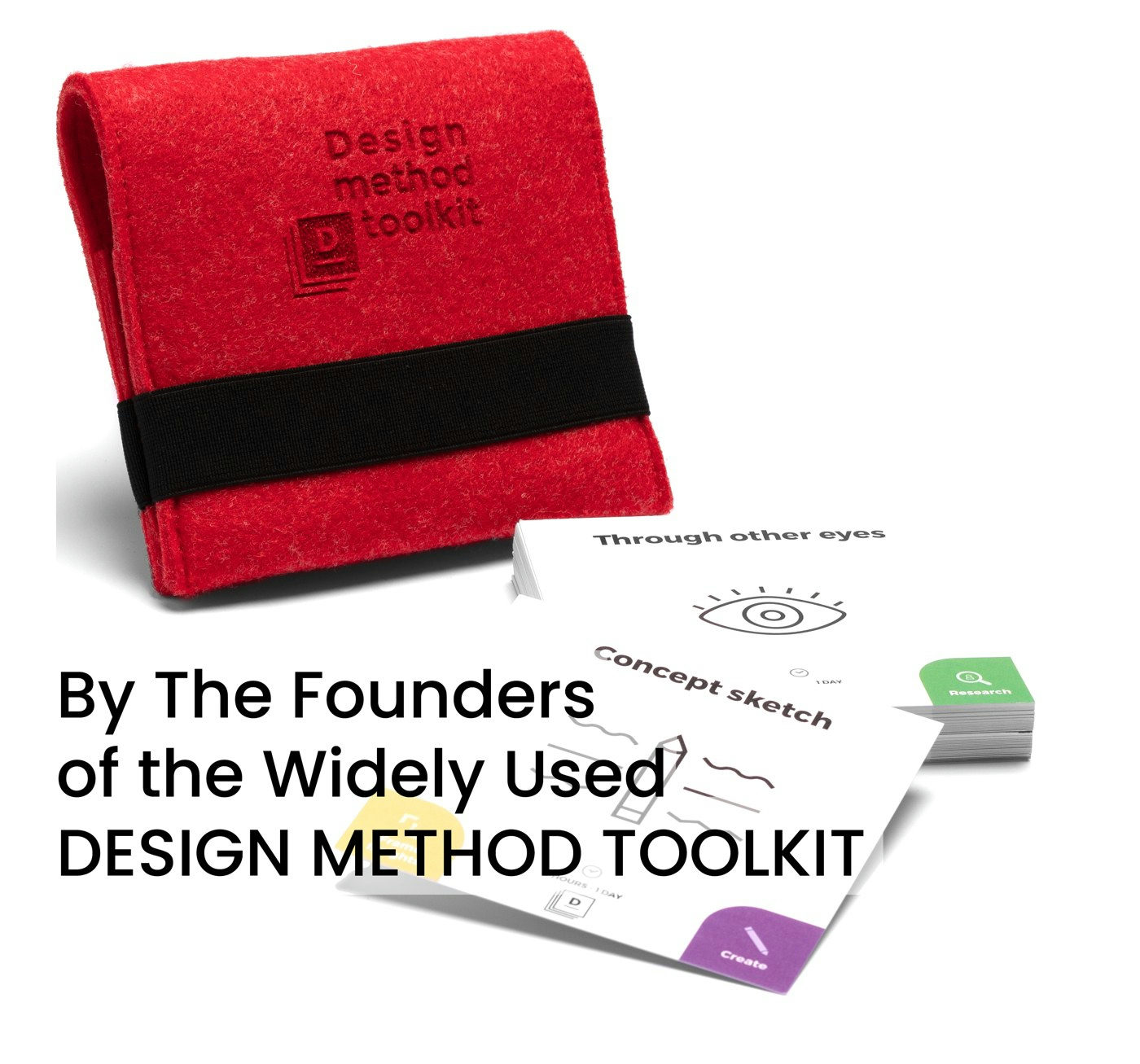
The method lives as a card in the Design Method Toolkit, the deck we built at the Digital Society School to give multidisciplinary teams a shared language for design sprints. The card gives it a timebox of four hours to one day and seven tasks: analyze the data your team gathered, brainstorm how to make an outsider understand it fast, build a quick physical prototype, test it inside your team, iterate until it transmits, present it to your audience, and record what happens.
The card's "when" line is specific: use it when you have collected enough data to understand a problem and need people unfamiliar with it to empathize with it. Its "why" is one sentence — sometimes stakeholders need to see the situation differently. Anyone who has watched a steering committee nod politely at a research deck and then fund the wrong thing knows exactly which stakeholders that sentence means.
The Global Goals Jam is this method, stretched over 48 hours
In 2016 we designed the Global Goals Jam with UNDP: 48-hour design sprints where local teams work on the UN Sustainable Development Goals, running in more than 60 countries. What most jammers never notice is that the jam's architecture is Empathy in Action, scaled up. The four sprints of a jam are the four movements of the method: explore it (dive into the local context and its data), respond to it (make a first lo-fi prototype), make it (build the real thing), and share it (take it outside and collect reactions).
We built it that way on purpose. The SDGs are the ultimate "situation foreign to you" — abstractions like Goal 11, Sustainable Cities, mean nothing until they become this bus stop, this neighbourhood, this Tuesday. So a jam forces every team to localise the goal, then make it tangible, then hand it to people on the street. The jam motto is the method's motto: fall in love with the problem, not your solution. Einstein's line hangs over every jam we run — given one hour to save the planet, he would spend 59 minutes defining the problem.
Rome: conversational objects on the street
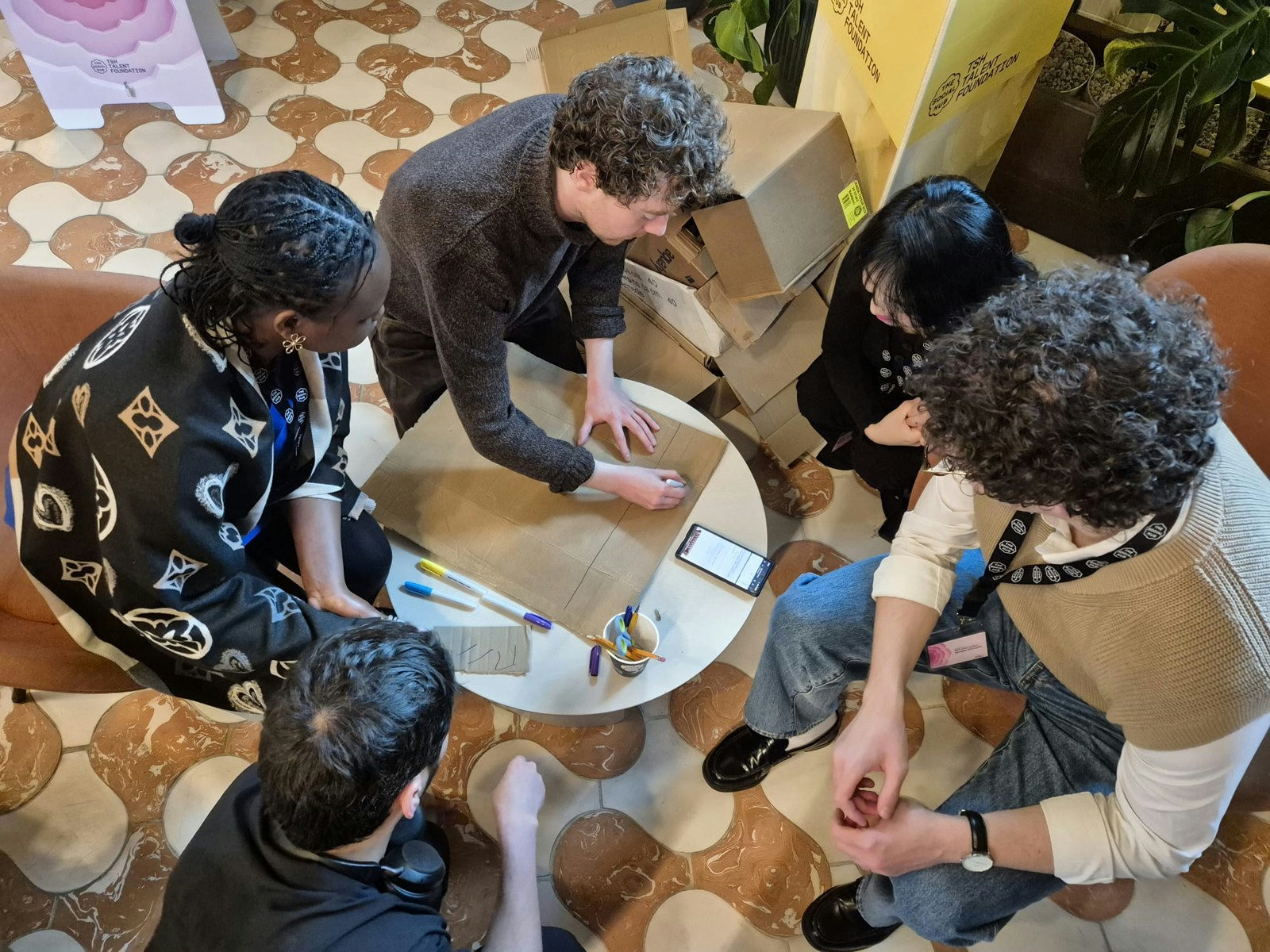
This March the method went to work again at the Better Society Academy in Rome, a programme we ran with the TSH Talent Foundation and Amsterdam University of Applied Sciences from 30 March to 2 April. Young changemakers from across Europe spent an afternoon in a practice we call critical making: building conversational objects, physical provocations designed to start conversations about an urban challenge on the streets of Rome.
A conversational object is not a solution. It is a question with a body. Our reference examples: Tomo Kihara's Street Debater, a seesaw placed on the pavement where passers-by physically tip a provocative question toward yes or no, and Candy Chang's installations where people write their anxieties and hopes on cards, making invisible emotions public. The teams in Rome had twenty minutes to sketch, build from rest materials, and test on another team. The design bar was concrete: self-explanatory, invites one clear action, reveals something, creates dialogue, and makes your challenge felt rather than heard.
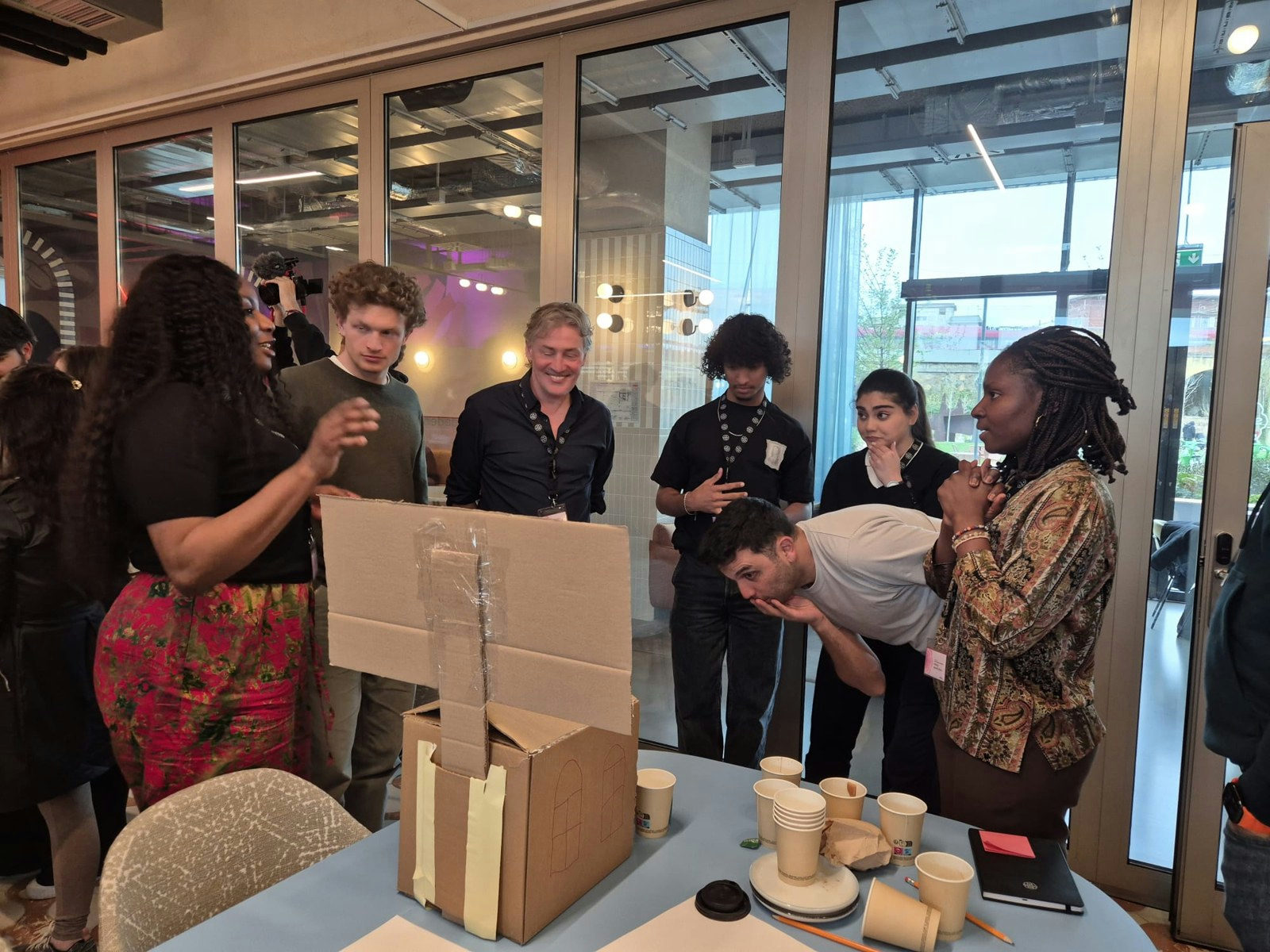
The next morning they took their objects to the streets. Cardboard, tape and markers, tested against real Romans with no patience for design theory. Several teams came back and rebuilt their object from scratch, not because a facilitator told them to, but because a stranger's blank look had told them first. That is the method doing its job: the street is a more honest reviewer than any workshop room.
Run it inside your next session
You do not need 48 hours or a trip to Rome. Empathy in Action works as a 90-minute block inside almost any innovation, design or co-creation session, ideally after your research phase and before ideation. Here is the block I run:
- Localise the challenge (15 min). Four quick prompts per team: who is this about, where does it happen, why is it urgent now, and a "How might we" question that pins the challenge to a real place and moment.
- Brainstorm the transmission (10 min). Not "how do we solve it" but "how would a stranger feel this in two minutes"? A game, a seesaw, a card exercise, a data object you can hold, a wearable, a sign.
- Sketch (5 min), build (20 min). Rest materials only: cardboard, tape, string, markers. Ugly is fine. Interactive is mandatory.
- Test on another team (10 min). No explaining allowed. If they need the pitch, the object failed. Watch what they do before you listen to what they say.
- Iterate (15 min), then reflect (15 min). Does the object make the problem felt, and would a stranger stop for it? Capture what the test revealed about your own understanding of the problem, because that is the actual deliverable.
Measure it. After the block, ask each team to write down what changed in their problem statement. In Rome we had teams rewrite their "How might we" question three times in two days. If your problem statements survive the block untouched, either your teams understood the problem unusually well or the objects were too polite.
Add an Empathy in Action block to your own workshop
If you design your sessions in Metodic, the Architect can build this block into an existing workshop for you: it will fit the timings to your agenda, generate the localise-worksheet and the build instructions, and add a debrief that captures what the tests revealed. Open the Session Studio with a prefilled Empathy in Action briefing and it will ask about your challenge and audience, then design the sequence for you:
Design my Empathy in Action block in Metodic
Sources
Design your own session
METODIC turns ideas like these into a complete session agenda with activities, timing, and materials — for workshops, meetings, offsites, and team sessions.